
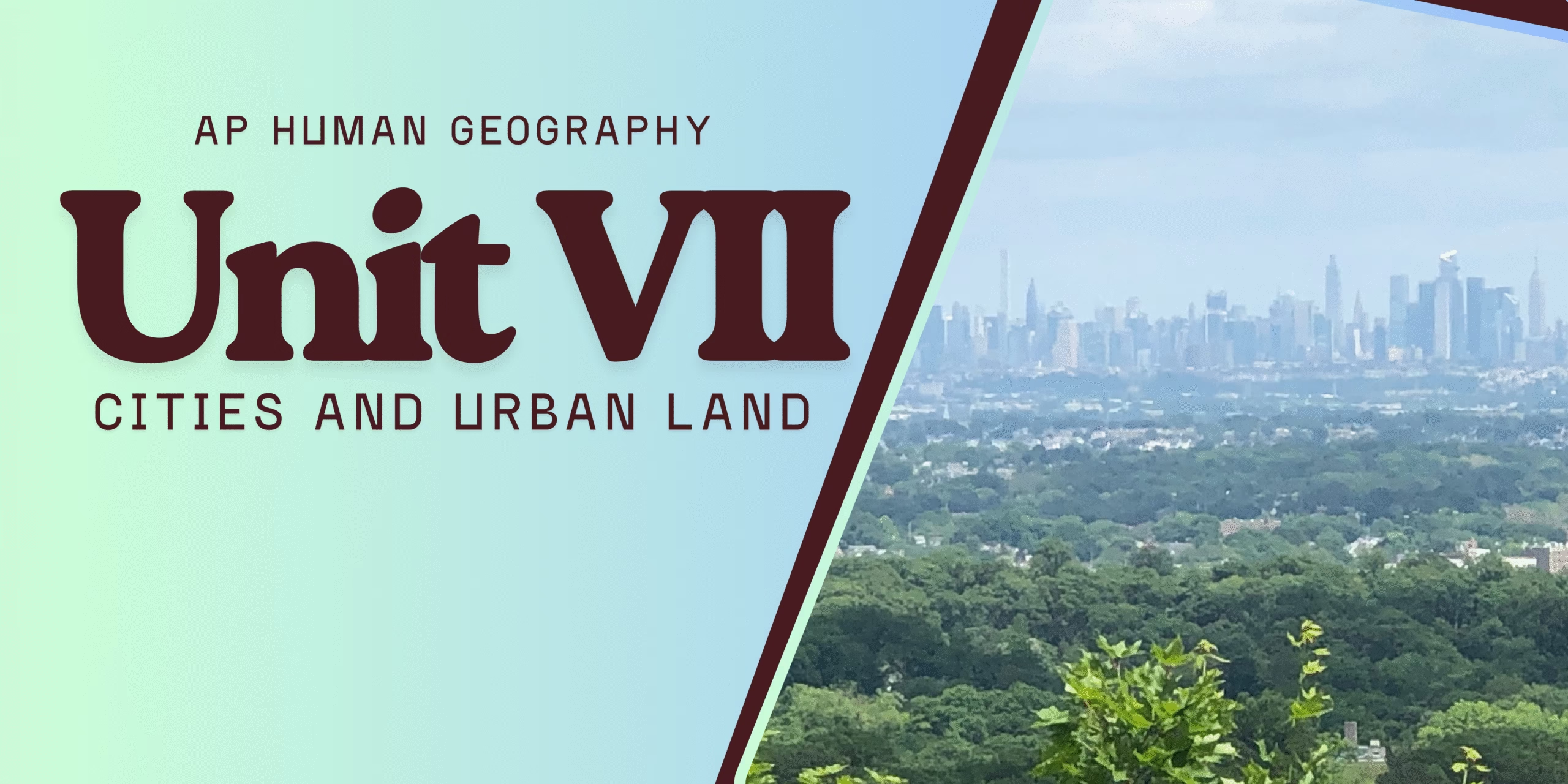
AP Geography Unit VII Overview

Cities and Urban Land Use
Cities are more than skylines and streets—they reflect economic systems, cultural identities, and human needs. In Unit 7: Cities and Urban Land-Use Patterns and Processes, we examine how cities develop, how they’re structured, and the challenges they face in an urbanizing world. Let’s walk through it.
I. The Origin and Evolution of Cities
Cities emerged as centers of trade, government, and religion. The earliest urban settlements date back to the Fertile Crescent (Mesopotamia), Indus Valley, and Mesoamerica.
Urbanization surged with the Industrial Revolution, pulling people from rural to urban areas. Today, over 55% of the world’s population lives in urban areas, and that number keeps rising.
Urban hierarchy ranks settlements by size and economic power:
- Hamlet → Village → Town → City → Metropolis → Megacity
- Primate city: Dominates a country’s economy/culture (e.g., Bangkok)
- Rank-size rule: Second-largest city is half the size of the largest (common in MDCs with balanced development)
II. Models of Urban Structure
Geographers created models to explain city layout and land use:
- Concentric Zone Model (Burgess)
- Rings of growth from the CBD outward
- Zones: CBD → transition → working class → middle class → commuters
- Sector Model (Hoyt)
- City grows in wedges along transportation routes
- Wealthier areas follow rail lines or roads
- Multiple Nuclei Model (Harris-Ullman)
- Cities have several centers (nodes) for different activities
- Example: One area for industry, another for shopping
- Galactic/Peripheral Model
- Post-industrial, car-centric cities
- Features edge cities—new hubs around traditional urban centers
- Latin American Model (Griffin-Ford)
- Combines colonial legacy with modern development
- Wealthy near the CBD; squatter settlements on the periphery
These models help us understand land values, infrastructure, and segregation patterns, even if real cities are more complex.
III. Urbanization and Its Consequences
Urbanization has transformed social and economic systems, but it brings both opportunities and challenges:
Benefits:
- Innovation, culture, job creation
- Efficient infrastructure and services
- Diverse, dynamic populations
Challenges:
- Overcrowding and housing shortages
- Traffic congestion and air pollution
- Water and sanitation access in LDC cities
- Squatter settlements: informal housing on city margins
Cities must balance growth with livability—and that’s no easy task.
IV. Suburbanization and Edge Cities
In many MDCs, urban growth shifted outward into suburbs:
- Driven by highways, cars, and the desire for space
- Resulted in urban sprawl—low-density expansion into rural land
- Led to the rise of edge cities: self-contained suburbs with jobs, retail, and entertainment
In the U.S., post-WWII policies like redlining and blockbusting fueled racial and economic segregation, shaping today’s metro areas.
V. Gentrification and Urban Renewal
Gentrification is when wealthier residents move into lower-income urban neighborhoods, raising property values and often displacing longtime residents.
Pros:
- Revitalized infrastructure
- New investment and amenities
Cons:
- Displacement of low-income residents
- Loss of cultural identity and affordability
Cities also engage in urban renewal: redeveloping blighted areas, sometimes controversially, as seen in projects like highway construction through minority neighborhoods.
VI. Urban Land-Use Patterns
Urban land is valuable—how it’s used depends on zoning, transportation, and market forces. Key zones include:
- CBD (Central Business District): Tall buildings, business hubs, highest land cost
- Residential areas: Vary by income; wealthier areas often further from industrial zones
- Industrial zones: Near transportation routes
- Commercial corridors: Retail centers along major roads
Zoning laws regulate how land is used: residential, commercial, industrial, or mixed-use. These influence segregation, development, and social outcomes.
VII. Transportation and Infrastructure
Urban efficiency depends on infrastructure:
- Public transportation: Subways, buses, trams (reduces traffic, pollution)
- Utilities: Water, electricity, internet
- Road networks: Connect city zones and influence land value
Infrastructure investment impacts everything—from economic growth to equity in access.
VIII. Urban Sustainability and Smart Growth
As cities grow, sustainability becomes crucial:
- Smart growth: Combats sprawl with walkable neighborhoods, public transit, mixed-use zoning
- Green belts: Protected land around cities to limit expansion
- New Urbanism: Design that emphasizes community, reduced car dependency
Cities now focus on:
- Resilient infrastructure
- Green roofs, solar panels, and bike lanes
- Urban agriculture and recycling programs
Balancing development and environment is key to future cities.
IX. Urban Issues in Developing Countries
Cities in LDCs face distinct challenges:
- Rapid growth often outpaces infrastructure
- Slums and informal economies dominate urban landscapes
- Water access, waste disposal, and healthcare can be inconsistent
- Many cities operate with dual economies: modern vs. informal
Despite this, LDC cities are engines of change, innovation, and resilience.
X. Why This Unit Is Crucial
Unit 7 helps us decode how and why cities grow—and who gets to benefit. It asks tough questions:
- Who has access to housing, transport, and clean air?
- Why are some neighborhoods thriving and others ignored?
- How can cities prepare for the future without leaving people behind?
Whether it’s understanding gentrification or analyzing zoning maps, this unit teaches students to read the city like a geographer—and see the social patterns written in concrete and asphalt.