

Unit 5: Essential Terms on Agriculture

If you’ve ever wondered why cows live far from cities or how deserts are (sadly) made by humans, this list is for you. These ten key terms from Unit 5 of AP Human Geography explain how farming works, from small family plots to giant agribusiness empires. Each entry includes a clear academic definition and a no-jargon explanation, so whether you’re studying for a test or just curious about how your food gets to your plate — you’re covered. Let’s dig into the field… of agricultural geography. 🌾
1. Von Thünen Model
📘 Academic: A spatial model from the 19th century that explains agricultural land use based on distance from a central market, considering transportation costs and perishability.
🌱 Basic: Farms closer to cities grow items that spoil quickly; distant farms grow durable or bulky goods.
Think of the Von Thünen Model as ancient DoorDash logic. Perishable goods like milk and lettuce stay near the city (nobody wants sour cream soup), while grain and livestock hang out farther away. Distance = cost, so farmers plant smarter, not harder.
2. Agribusiness
📘 Academic: A large-scale, commercial agriculture system where production, processing, and distribution are integrated, often managed by corporations.
🌱 Basic: Farming as a business, often run by big companies from planting to selling.
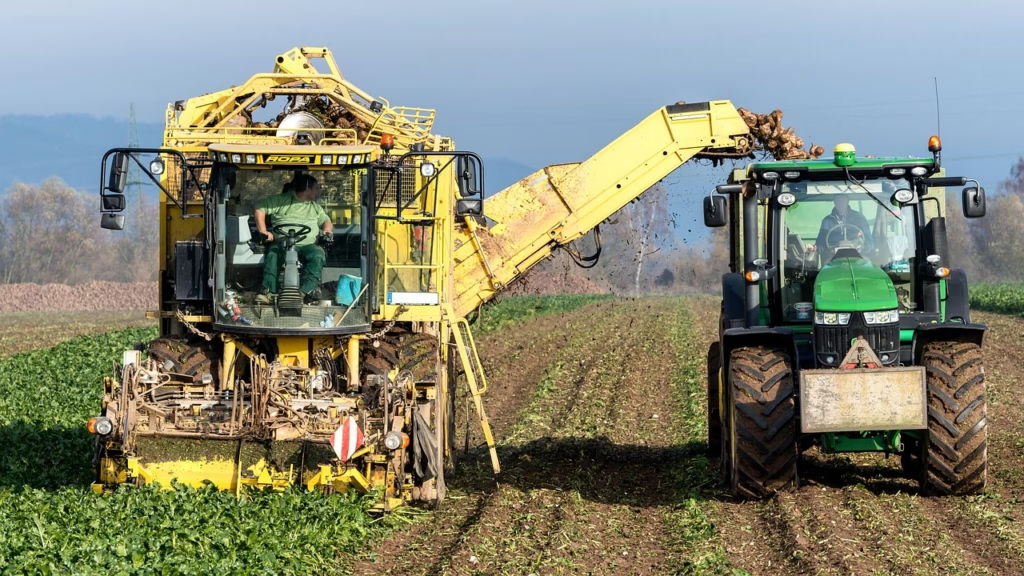
3. Green Revolution
📘 Academic: A 20th-century transformation in agriculture marked by increased crop yields due to scientific advancements like improved seeds, fertilizers, and irrigation.
🌱 Basic: Science helped farmers grow more food using better seeds and tools.
The Green Revolution pumped up food production with high-tech seeds, chemicals, and irrigation. Suddenly, rice and wheat were jacked like they’d hit the gym. Great for fighting famine—but not so great for the environment. Spoiler: Mother Nature didn’t sign off on all those fertilizers.
4. Subsistence Agriculture
📘 Academic: Farming in which food is produced by a family for its own consumption rather than for sale.
🌱 Basic: Farmers grow just enough food for themselves and their families.
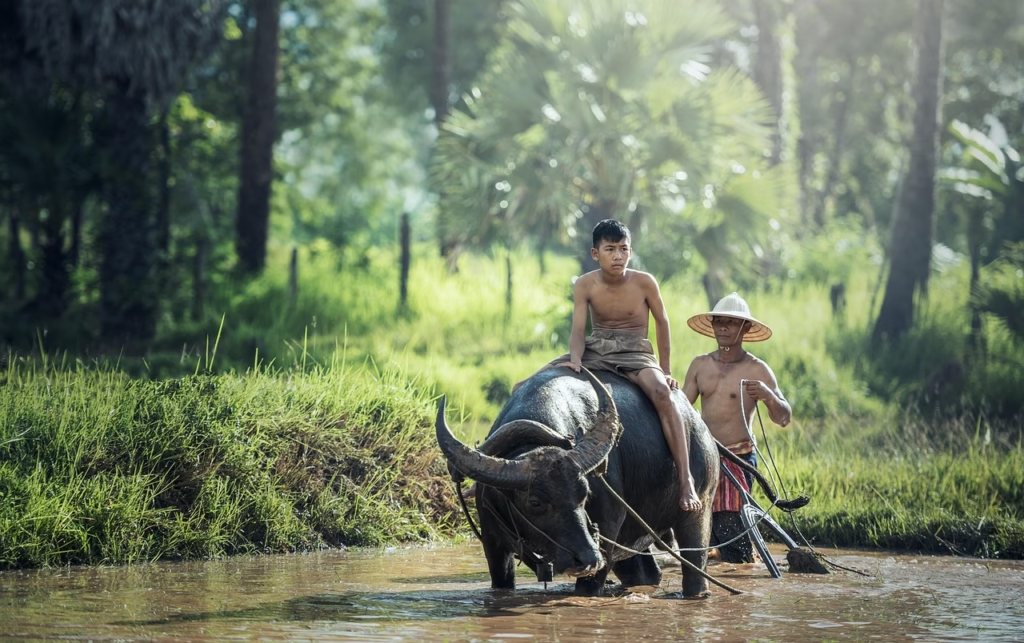
5. Commercial Agriculture
📘 Academic: Large-scale farming where crops and livestock are produced for sale in markets, not for direct consumption by the farmer.
🌱 Basic: Farming meant to sell products, not just to eat them.
6. Intensive vs. Extensive Agriculture
📘 Academic: Intensive agriculture uses a lot of labor and resources on small land areas, while extensive agriculture uses less input over larger areas.
🌱 Basic: Intensive = more work on small land; Extensive = less work on bigger land.
7. Shifting Cultivation
📘 Academic: A traditional farming method in tropical regions where land is cleared, farmed for a few years, then left to recover while farmers move to new areas.
🌱 Basic: Farmers clear land, grow crops for a bit, then move and let the land rest.
It’s farming on tour! Slash some trees, plant crops, harvest, then peace out so the soil can nap. Common in tropical regions, it’s like crop rotation—but with hiking. It’s sustainable-ish, unless a million people try it at once. Nature’s cool with it… unless deforestation crashes the party.
8. Pastoral Nomadism
📘 Academic: A form of subsistence agriculture based on the herding of domesticated animals across dry regions where crops can’t grow well.
🌱 Basic: Moving with animals to find food and water in dry climates.
9. Desertification
📘 Academic: The process where fertile land becomes desert-like due to overuse, deforestation, or climate change.
🌱 Basic: Good farmland turns into desert from bad farming or environmental damage.
10. Food Desert
📘 Academic: An area where access to affordable, nutritious food is limited, especially in low-income urban or rural areas.
🌱 Basic: A place where it’s hard to find healthy food nearby.
It’s where fresh fruit is rarer than Wi-Fi in the woods. Convenience stores replace grocery stores, and “dinner” often means chips and soda. Geography matters when your ZIP code decides what’s on your plate.
11. Monoculture
📘 Academic: The agricultural practice of growing a single crop over a wide area, often associated with commercial farming for efficiency, but raising concerns about biodiversity and soil health.
🌱 Basic: One farm, one crop. Great for machines, bad for variety or soil.
12. Bid-Rent Theory
📘 Academic: A theory that explains how land value and use change with distance from a central point, such as a city or market. Applied to agriculture, it supports why intensive farming is found closer to cities.
🌱 Basic: Land closer to cities costs more, so farmers there grow valuable, quick-selling stuff.
Understanding these agriculture terms isn’t just about memorizing for the AP exam — it’s about seeing how geography affects real-world issues like food access, land use, and sustainability. Whether it’s shifting cultivation or agribusiness, each concept shapes our global food system in big ways. Review these terms, connect them to examples, and you’ll be more than ready for test day — or at least to impress someone at dinner with your knowledge of the Von Thünen model. 🌍
Multiple-Choice Questions
Test your understanding of the key terms from Unit 5 with these AP-style questions!
1. Which of the following best explains why dairy farms are typically located closer to urban centers?
A. Cows require specialized terrain
B. Dairy products are perishable and need quick transport
C. Urban areas produce more livestock
D. Bid-rent theory discourages dairy near cities
2. A commercial farm grows only one crop year-round using advanced machinery. Which term best describes this practice?
A. Terrace farming
B. Shifting cultivation
C. Subsistence agriculture
D. Monoculture
3. According to the bid-rent theory, which of the following would most likely be found farthest from a central market?
A. Vegetable farms
B. Dairy farms
C. Grain fields
D. Flower markets
4. Which agricultural method is most associated with tropical rainforest environments and involves temporarily clearing land for farming?
A. Monoculture
B. Pastoral nomadism
C. Shifting cultivation
D. Green Revolution
5. What is a major environmental concern associated with monoculture farming?
A. Increased biodiversity
B. Better crop rotation
C. Soil depletion and pest vulnerability
D. Easier subsistence living
Answers: B,D,C,C,C